Basement Flooding Cleanup in Blue Springs, MO
The extraction crew pulls the water out of the basement, the drying team dries the slab, walls and framing to the IICRC S500 goal, and every reading goes in the claim file, 24/7.
(888) 603-7319Basement under water? Call the crew now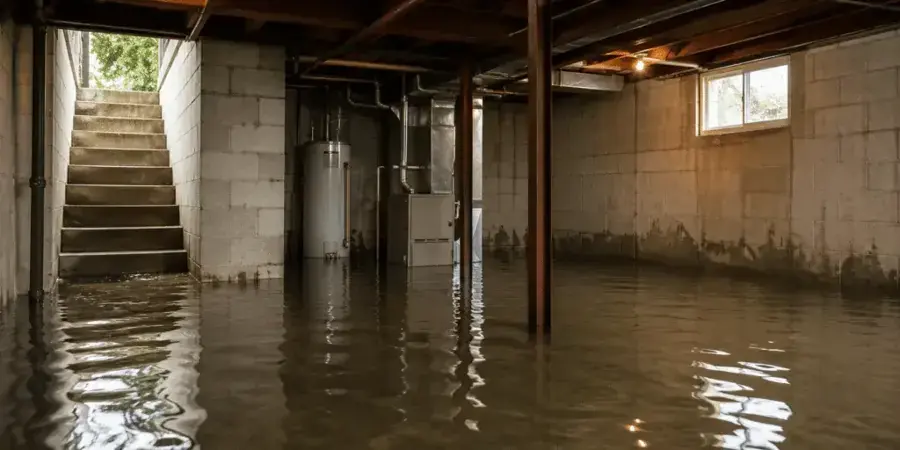
First steps for basement flooding cleanup in Blue Springs
- 1
Shut off power to the basement
Switch off the basement breakers only if the panel is dry and reachable without stepping in water.
- 2
Find the source if you can
Check the sump pit, the floor drain and the walls to see where the water is coming in.
- 3
Get valuables off the floor
Move boxes, rugs and electronics up the stairs or onto shelves.
- 4
Photograph the water line
Take wide shots and close-ups of the wet walls and floor before anything is moved.
What does basement flooding cleanup cost in Blue Springs, MO?
Basement flooding cleanup in Blue Springs typically runs $2,500 to $11,000. An unfinished basement with clean water sits at the low end; a finished basement with carpet, drywall and a soaked slab sits at the high end.
Unfinished basement, clean water
- Extraction from the slab
- Air movers and dehumidifiers
- Daily slab readings
Finished basement
- Carpet, pad and flood cuts removed
- Wall cavity drying
- Moisture map for the claim
Sewage or outside flood water
- Containment and HEPA scrubbers
- Porous materials removed
- EPA-registered antimicrobial
Ranges are typical, not a quote: the water category, the wet square footage, the material class and how fast drying started move the number most. Run the Blue Springs water damage cost calculator for a closer planning range.
How basement flooding cleanup is handled in Blue Springs
- 1
Map the basement
The tech who does the walkthrough reads the slab, the walls and the framing with meters and a thermal camera.
- 2
Extract the water
The extraction crew pulls standing water off the slab and out of the carpet before anything else.
- 3
Remove what cannot dry
The mitigation team pulls soaked pad and cuts wet drywall so the wall cavities can breathe.
- 4
Dry and verify
The drying team runs dehumidifiers and air movers until the slab and walls read dry.
Most Blue Springs homes sit over a full or walkout basement, and that is where water ends up. The restoration team finds the source first, because seepage through a wall, a failed sump pump and a floor drain backup each call for a different cleanup.
Where basement water comes from in Blue Springs
Clay soil around the foundation holds rain against the walls, so seepage shows up at cracks, around pipes and at the cove joint where the wall meets the floor. Walkout basements also take surface water at the door during hard storms.
When the pit overflows, the sump pump failure cleanup page covers that case. When water rises from the floor drain, it is a sewer backup and gets handled as Category 3.
- Seepage at wall cracks and the cove joint
- Surface runoff through window wells and walkout doors
- Burst or frozen pipes in the basement ceiling
- Water heater and washer failures
What comes out and what gets dried
Carpet pad soaked in a finished basement almost always comes out, and the carpet often follows. The drying team makes flood cuts in drywall above the water mark so the insulation and studs behind it can dry.
Concrete slabs and block walls are Class 4 materials. They give up water slowly, so the crew adds dehumidifiers sized for dense materials and tracks the slab with readings, not by touch.
Keeping the basement from flooding again
Extending downspouts, keeping the yard sloped away from the walls and adding a battery backup to the sump pump cut the risk the most. The basement flood risk check gives a quick read on a home, and the Ready.gov flood page covers storm preparation.
Mold can start on wet materials inside 24 to 48 hours, which the EPA mold guidance explains, so the restoration team treats a flooded basement as urgent.
Basement flooding cleanup across Blue Springs and eastern Jackson County
The restoration team covers ZIP 64014 and 64015 across Blue Springs, plus 64013 for post office boxes, from Downtown and Main Street and the Missouri 7 corridor to Woods Chapel Road near Lake Jacomo and the newer streets off Adams Dairy Parkway and R.D. Mize Road.
Nearby coverage reaches Grain Valley, Independence, Oak Grove, Lee's Summit, Raytown, Lake Tapawingo, Lake Lotawana, Greenwood.
Related water damage services in Blue Springs
Basement Flooding Cleanup questions in Blue Springs, MO
How fast does a flooded basement need attention?
Wet drywall and pad should start drying inside 24 to 48 hours. After that, the mold growth window opens and more material has to come out.
Can basement carpet be saved?
Carpet hit by clean water can sometimes be dried in place. Pad almost always comes out, and carpet touched by drain or flood water is removed.
Why does the slab take so long to dry?
Concrete is a Class 4 material. It holds water deep inside and releases it slowly, so the drying team uses dehumidifiers built for dense materials.
Does insurance cover a flooded basement in Missouri?
It depends on the cause. A burst pipe is often covered, sump overflow and sewer backup usually need an endorsement, and outside flood water needs flood coverage. Check with your own insurer.
What is a flood cut?
A flood cut removes drywall in a straight cut above the wet area, often 2 or 4 feet up, so the insulation and studs behind it can dry.
How is basement flooding cleanup priced?
Price follows the water category, the wet square footage, how much of the basement is finished and how fast drying started.
Basement flooding in Blue Springs? Call now.
Every hour water sits on the slab, it climbs higher into drywall and framing. The Blue Springs restoration crew extracts, dries and documents the loss for your claim.
(888) 603-7319Start the basement dry-out