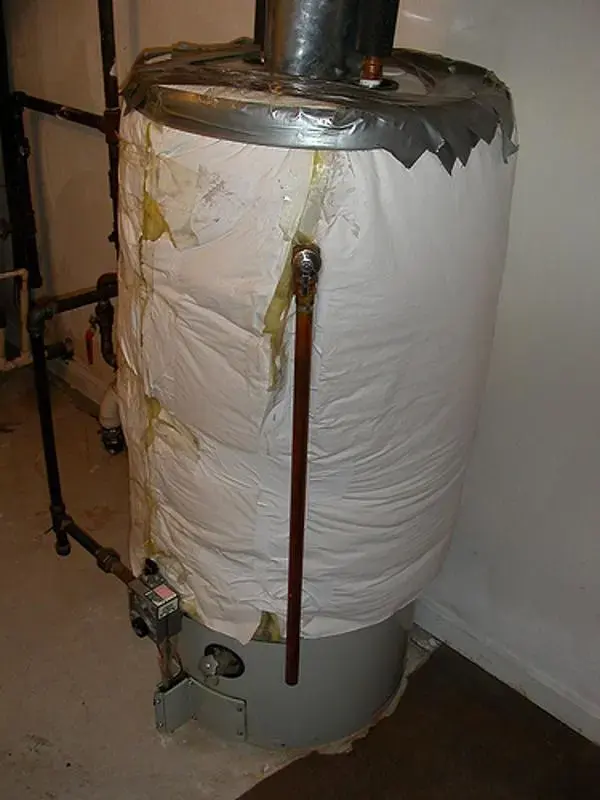
In many Blue Springs homes the water heater, the washer and the furnace share one corner of the basement. When one of them leaks, the water heads for the carpet, the storage shelves and the finished room next door.
Key takeaways
- A slow drip at the base of a tank and a failed tank are different problems, but both mean the water heater needs a plumber.
- Shut off the cold water supply to the tank and the power or gas before dealing with the water on the floor.
- A washer hose is a second source in the same basement laundry and can leak or burst under pressure.
- Extraction comes first, then the drying team checks walls, floors and stored items.
- Basement leaks can run a long time before anyone sees them, so a damp floor under a tank deserves attention.
Why the basement corner is a leak zone
Blue Springs grew from under 7,000 people in 1970 to more than 40,000 by 1990, and most homes are 1970s to 1990s ranches, split-levels and two stories over full or walkout basements. In those houses the mechanical corner is often in the basement.
A water heater, a washer, a furnace and sometimes a sump pit sit within a few steps of each other. A leak from any one of them can reach the others and the rest of the floor.
- Basement water heaters and furnace condensate pumps are common failure points.
- Washer hoses in basement laundries are a second one.
- Finished basements add carpet, drywall and furniture to the path of the water.
A slow drip or a failed tank
A water heater does not always fail all at once. Some leak slowly for weeks before the problem shows, and the floor under the tank may stay damp for a long time without a puddle.
Signs of a slow leak
A small, steady wet spot on the floor under the tank, or rust at the base, is often the first sign. A fitting or valve can weep without the tank itself being damaged.
A wet drain pan, a rust stain on the floor or damp cardboard nearby also points to a slow leak.
- Damp spot or rust under the tank
- Water at a connection or the relief valve
- Musty smell in the mechanical corner
Signs of a failed tank
When the tank itself fails, the water can spread across the basement in a short time. A tank that holds many gallons can send a wide sheet of water across concrete and into every room it reaches.
A plumber can tell whether a fitting can be fixed or the tank must be replaced. A leaking tank usually is replaced, not patched.
- Water pouring from the bottom or sides of the tank
- Water across the floor with no other source
- Noise and steam from a tank that is leaking onto a hot surface
What to do in the first moments
Safety comes first. Water and electricity do not mix, and a gas water heater adds its own risks.
These steps fit most basement water heater leaks.
- Turn off the power to an electric water heater at the panel, or set a gas unit to its pilot or off position if it is safe to reach.
- Close the cold water supply valve on the pipe leading into the tank.
- Stay out of standing water if outlets or the panel are near it.
- Move boxes, rugs and furniture off the wet floor onto blocks or plastic.
- Photograph the tank, the floor and any damaged items.
- Call a plumber for the tank and the restoration team for the water.
The washer hose and other appliance leaks
A basement laundry adds its own risk. Washer hoses run under constant pressure, and the rubber ages.
A hose that bursts can send water across a floor until the supply is shut off.
A stuck valve, a loose connection or a drain hose that slips out of the standpipe can do the same. Many leaks start small and grow when the washer runs.
More about this kind of loss is on the appliance leak water damage page.
- Check hoses for bulges, cracks and rust at the fittings.
- Close the washer supply valves when the machine is not in use.
- Leave a clear space around the washer so a leak can be seen.
- Consider hoses with braided sleeves; ask a plumber about the right type.
Extraction, then drying
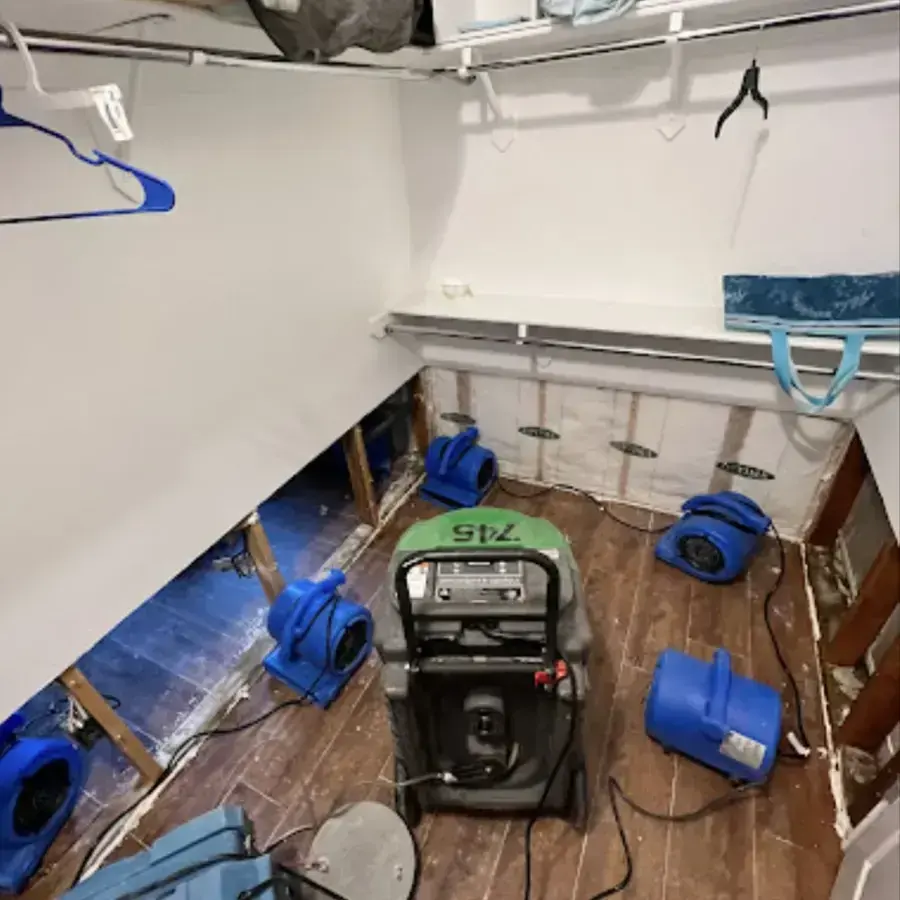
The extraction crew removes standing water with wet vacuums and pumps. Water that sits on concrete soaks into the slab and the bottom of walls, so removal begins right away.
The drying team then checks drywall, baseboards, carpet and stored items with a moisture meter. A thermal camera shows wet areas behind finished walls.
Details on the water heater leak cleanup and water extraction services explain how the steps fit together.
- Standing water is extracted first.
- Carpet and pad are lifted and checked.
- Wet drywall is cut above the wet mark if it wicked water.
- Equipment dries the slab, the framing and the air.
- Readings continue each visit until the dry standard is met.
Finished rooms, storage and the furnace area
A leak that reaches a finished basement can soak carpet, pad, drywall and furniture. A leak in an unfinished corner can still wick into the bottom of a wall and into boxes.
Furnace condensate pumps and a sump pit can add water. The restoration team checks each source so a second leak does not undo the drying.
- Cardboard storage is usually discarded when it wicked water.
- Plastic bins and metal shelves can be cleaned and kept.
- Carpet pad is replaced; carpet can sometimes be saved if lifted promptly.
- Wood furniture is wiped, dried and checked.
Who does what after the tank leaks
Two jobs run side by side after a water heater leak. The plumber deals with the tank, the fittings and the replacement, and the restoration team deals with the water that is already in the house.
Neither job replaces the other. A new tank does not dry a wet slab, and a dry slab does not stop a leaking tank.
A homeowner should tell each one what the other is doing so the work does not conflict. For example, the drying team may need the plumber to finish before equipment is placed in the corner.
- Plumber: shuts off and drains the tank, repairs or replaces it, checks the relief valve and the drain pan.
- Restoration team: extracts water, removes wet materials, dries the structure and logs readings.
- Homeowner: photographs the loss, keeps receipts and talks to the insurer.
- Ask the plumber to note the cause of the failure for the claim file.
Scalding water and other safety points
A leaking tank can still be hot. Water from the tank, the relief valve or a nearby pipe can scald skin, so a homeowner should be careful around it.
The restoration team keeps hot water, electrical power and gas appliances in mind when it sets equipment and works near the tank.
Keeping a leak from happening again
Not every failure can be predicted, but a few habits help. A basement mechanical corner is easy to ignore until water shows up.
- Look at the tank base and the drain pan whenever the furnace filter is changed.
- Know where the cold water shutoff and the washer valves are.
- Keep stored items off the floor near the tank.
- Replace aging hoses with new ones before they fail.
- Mold can start in 24 to 48 hours on wet materials, so do not let a leak sit.
Questions
Should I try to fix a leaking water heater myself?
A plumber should handle the tank. A homeowner can shut off the water and power, then get the water cleaned up.
How can I tell a washer hose leak from a water heater leak?
Look where the water first appears and trace it. A wet spot at the tank base points to the heater, and water near the washer points to a hose or a valve.
Can carpet in a finished basement be saved?
Sometimes, if the water was clean and the carpet is lifted and dried quickly. The pad is usually replaced.
Is water heater water clean?
It starts as clean supply water, but it picks up dirt and sediment from the floor. Porous materials that stay wet are removed.
How long does cleanup take?
It depends on how far the water spread. The drying team takes moisture readings each visit and stops when the materials are dry.