
A sewer backup raises two questions at once: who fixes the pipe and who cleans the house. In Oak Grove the city answers both in writing, and the answers matter for any claim.
Key takeaways
- The city says sewer problems inside a home or business, or between the building and the sewer main including the connection, are the customer's responsibility.
- The city asks residents with a backup to call Public Works, and says a plumber may be needed to clear the service pipe if water does not recede.
- City crews cannot help clean up private residences after a sewer backup.
- The city says its insurance will not usually reimburse homeowners unless the city was negligent.
- Photos, videos, receipts and itemized damage lists are what the city advises keeping for any claim.
What the city says about backups
Oak Grove publishes plain rules for sewer backups. Problems inside a home or business, or between the building and the sewer main, including the connection to the main, are the customer's responsibility.
The city asks residents who have a backup to call Public Works. If the water does not recede, a plumber may be needed to clear the service pipe.
These rules shape what a homeowner should expect, so they are worth reading before a loss happens. The Oak Grove water damage pros work from the same starting point on every backup.
- Customer: the pipe inside the building and the pipe to the main, including the connection.
- City: the sewer main and the wastewater system beyond it.
- Public Works is the first call when a backup begins.
- A plumber clears a blocked service pipe if the water does not recede.
How Oak Grove's sewer system works
The city collects wastewater through 8 lift stations that send it to the Oak Grove Wastewater Treatment Facility, which was built in 2006. The plant uses biological treatment with finishing clarifiers and UV disinfection before discharge to nearby streams.
The City of Oak Grove buys its drinking water from the City of Independence, and the city water division bills customers and handles new water and sewer service.
Oak Grove also has a Stormwater Division. A city ordinance bars sweeping yard waste, trash or sewage into storm drains, and detention basins and other structures hold runoff to reduce peak flow and localized flooding.
What the city will not do
The city is plain about the limits. City crews cannot help clean up private residences after a sewer backup.
The city also says its insurance will not usually reimburse homeowners for sewer backup damage unless the city was negligent.
That means cleanup is the owner's job and the owner's cost unless a policy or a successful claim says otherwise.
What this means in practice
A homeowner should assume the cleanup is theirs to arrange and should check the insurance policy for sewer backup coverage. Many standard policies need an add on for it, so the agent can confirm.
The sooner the water is out, the less it spreads into carpet, drywall and furniture.
- Ask the insurance agent whether the policy covers sewer backups.
- Do not wait for a city response before starting cleanup.
- Report the backup to Public Works so the main can be checked.
- Keep every record in one folder.
What the city advises keeping
The city advises keeping photos, videos, receipts and itemized damage lists for insurance claims after a sewer backup.
The restoration team's moisture readings and removal list belong in the same file.
- Photos and video of the backup and the damage
- Receipts for cleanup, rentals and repairs
- An itemized list of damaged belongings
- Notes on dates, times and who was told
The first day after a backup
Sewer water can make people sick, so the first moves are about safety. A household should avoid the affected area until it is cleaned.
These steps fit most backups.
- Stop using sinks, tubs, toilets and the washer so no more water goes into the drain.
- Keep children, pets and anyone who is ill away from the water.
- Turn off power to the area at the panel if water reaches outlets or appliances.
- Wear gloves, boots and a mask if anything must be moved.
- Photograph the water, the drain and each damaged item before anything is touched.
- Report the backup to Public Works and ask a plumber to check the service pipe.
What the cleanup removes
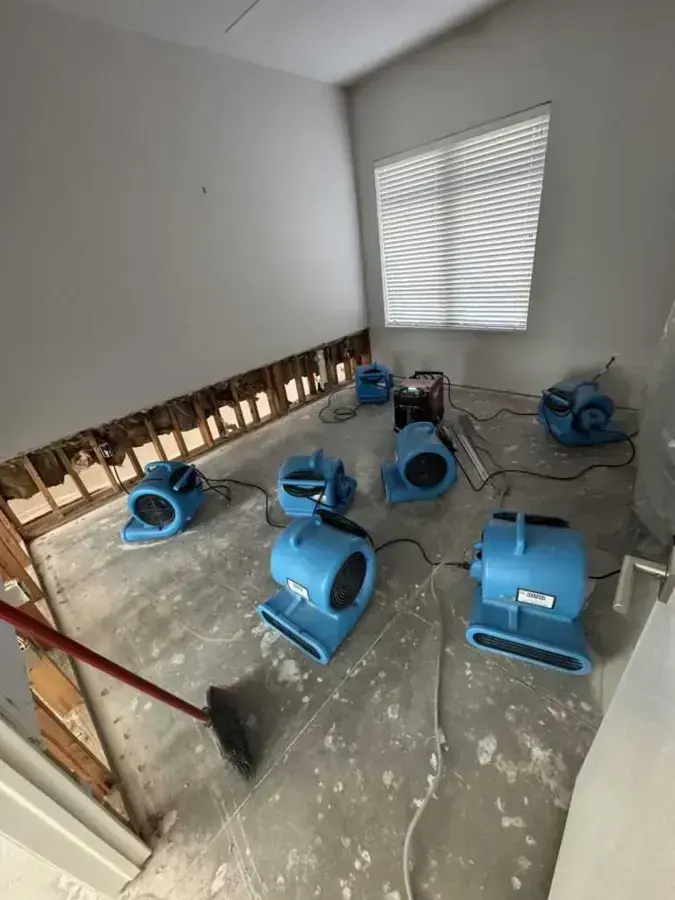
Sewer water is Category 3. The extraction crew pumps out standing water, and porous materials that touched it are removed because they cannot be cleaned safely.
Hard surfaces and structure are cleaned and treated with an antimicrobial, then dried. Moisture readings show when the structure is ready to rebuild.
The Oak Grove sewage backup cleanup page explains the process, and the structural drying service covers the drying stage.
- Carpet, pad and baseboard that touched the water
- Drywall that wicked contaminated water
- Insulation, cardboard and particleboard
- Surfaces cleaned and treated with an antimicrobial
- Mold can start in 24 to 48 hours on wet materials, so the first days count.
Customer pipes versus the main
Because the customer is responsible for the pipe between the building and the main, a blockage on that stretch is a plumbing job for the owner. A plumber can use a camera to find a clog, a break or roots.
If the blockage is in the main, the city has the repair. The difference is not always clear on first look, which is why the report to Public Works and the plumber's findings both matter.
- Ask the plumber where the blockage is and request a note in writing.
- Tell Public Works what the plumber found.
- Ask neighbors whether their drains are slow, since a main problem often affects more than one home.
- Keep the plumber's invoice and report with the claim file.
Why a backup is worse than other water
A burst supply pipe puts clean water into a house. A sewer backup puts waste water in, along with whatever the pipe carried.
That is why the cleanup is stricter. Materials that would be dried after a clean leak are removed after a backup, and the area is cleaned before drying starts.
The same approach is used across the area, and the Blue Springs sewage backup cleanup page lays out the steps.
- Clean water leaks: dry most materials in place.
- Category 3 backups: remove porous materials and treat the rest.
- Sewer water can carry bacteria, so protective gear is part of the work.
- A small backup still needs a careful cleanup because it spreads into carpet edges and cabinets.
Documentation and the insurer
A claim after a backup is easier when the story is clear. The owner should know when it started, what came up, what was damaged and what was done.
An insurer may ask for the plumber's report and the restoration team's records. A tidy file helps whether or not the city is held responsible.
- Write down the date and time the backup was noticed.
- Save the plumber's report.
- Ask for the restoration team's list of removed materials.
- Send documents to the insurer in writing and keep copies.
Questions
Who is responsible for a sewer backup in Oak Grove?
The city says problems inside a home or business, and between the building and the main including the connection, are the customer's responsibility. The main itself is the city's.
Will the city clean up my house after a sewer backup?
No. The city says its crews cannot help clean up private residences.
Will the city's insurance pay for my damage?
The city says its insurance will not usually reimburse homeowners unless the city was negligent. A homeowner should ask the agent about sewer backup coverage.
Who should I report a backup to?
The city asks residents to call Public Works. A plumber may be needed to clear the service pipe if the water does not recede.
What records should I keep?
The city advises keeping photos, videos, receipts and itemized damage lists. Add the plumber's report and the restoration team's records.