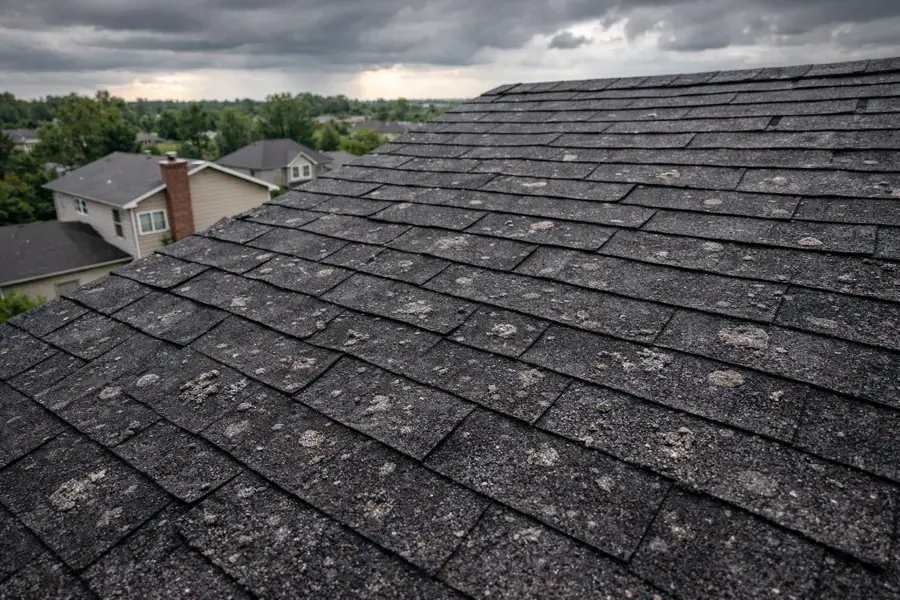
On March 6, 2017, an EF3 tornado crossed Oak Grove and damaged hundreds of homes. For many owners the first rain after the storm turned wind damage into water damage.
Key takeaways
- The March 6, 2017 EF3 tornado hit the south part of Oak Grove and damaged hundreds of homes; the National Weather Service reported 12 injuries and no deaths.
- A damaged roof lets rain into insulation and ceilings, often with no stain showing for days.
- Oak Grove requires a permit for roofing repair or replacement, so the roofer and the cleanup need to be planned together.
- Wet insulation and drywall are removed and the framing is dried, whether the roof is tarped or rebuilt.
- The same steps apply to any storm that opens a roof, not only a tornado.
The 2017 tornado and the water that followed
The EF3 tornado crossed Oak Grove on March 6, 2017, with estimated peak winds of 152 mph and a width of up to 400 yards. It hit the south part of the city and damaged hundreds of homes.
The National Weather Service reported 12 injuries and no deaths. Sirens sounded well before the tornado arrived and are credited with helping residents survive.
Sni Valley Fire Protection District firefighters worked through blocked streets, broken gas pipes and downed power wires. After the wind, the next problem for many homes was rain.
The Oak Grove water damage pros see the same pattern after any storm that opens a roof.
- Torn shingles, missing decking and shifted flashing let water in.
- Damaged soffits and ridge vents let rain reach the attic.
- Broken windows and doors let wind driven rain soak walls and floors.
- A tarp slows water but rarely stops it completely.
How rain gets from a damaged roof to a ceiling
Water that enters through a roof does not usually drip straight down. It runs along decking and rafters, soaks insulation and then spreads across the top of the ceiling drywall.
The stain on the ceiling can sit far from the hole in the roof. By the time a spot shows, the attic above may have been wet for days.
What the attic hides
Fiberglass and blown insulation hold water and press it against the drywall. A ceiling may bulge, sag or crack before it leaks.
Wet insulation also slows drying, so it is removed instead of left in place.
- Brown or yellow stains on the ceiling
- Bubbling or peeling paint
- A soft, bulging section of drywall
- Dripping from a light fixture
Why a tarp is only a pause
A tarp keeps most rain out, but wind can lift it and water can get under the edges. Rain between the tarp and the permanent repair can still reach the ceiling.
A homeowner should check the attic and ceilings after every heavy rain until the roof is repaired.
Oak Grove's roofing permit
The city requires a permit for roofing repair or replacement. Permits are also needed for plumbing, gas, mechanical and electrical system work, while cosmetic work such as painting and floor refinishing is exempt.
Oak Grove has adopted the 2017 and 2018 International Codes and the 2017 National Electrical Code. A roofer should know which rules apply and pull the permit.
The permit adds a step, so the cleanup should not wait on it. Water that sits in a ceiling does not wait for paperwork.
- Ask the roofer whether the permit has been pulled.
- Keep the permit record with the repair invoice.
- Tell the drying team the roof work schedule so openings are not left exposed.
- Hold photos of the roof damage taken before and after the repair.
The first day after a roof leak
A ceiling leak can turn into a ceiling collapse. Protect people first, then the contents.
These steps fit most roof leaks.
- Stay out from under a bulging ceiling and keep children and pets away.
- Place buckets or tubs under drips and move furniture away.
- Turn off power to a room if water is near a light fixture or an outlet.
- Do not poke or cut a bulging ceiling yourself; leave that to the drying team.
- Photograph the ceiling and the roof damage if it is safe to look.
- Cover the roof hole with a tarp or ask the roofer to do it.

What the drying team removes first
The drying team starts with the parts that cannot dry in place. Wet insulation comes out of the attic, and wet ceiling drywall is cut away so the framing can be reached.
Moisture meters and a thermal camera show how far the water traveled. Rafters, ceiling joists and the top plates of walls are checked because water often runs down inside the wall cavity.
More detail on the work is on the Oak Grove roof leak water damage and ceiling leak water damage pages.
- Insulation that soaked is bagged and removed.
- Ceiling drywall that is wet or sagging is cut out.
- Framing and sheathing are dried with air movers and dehumidifiers.
- Readings are taken each visit until they meet the dry standard.
When a repair has to wait
After a storm that damages hundreds of homes, roofers and permit offices can be busy, and a tarp may stay on longer than anyone wants.
That is when the attic matters most. A tarp keeps the worst out, but each rain can add a little more water to wet insulation that never fully dried.
- Check the attic after each heavy rain for damp insulation or daylight through the decking.
- Look for new stains on upstairs ceilings and around light fixtures.
- Ask the drying team whether a dehumidifier in the rooms below the tarp is worth running.
- Report new stains to the roofer and the drying team right away.
- Record dates of rain and any new damage for the claim.
Floors, walls and contents below the ceiling
Water that leaves the ceiling lands on the floor and soaks into carpet, furniture and walls. If the ceiling collapsed, the drywall and insulation add debris.
A homeowner should move small items out of the room, but the crew handles heavy furniture so it is not damaged or dropped.
- Carpet can often be saved if the water was clean and it is lifted quickly.
- Pad is usually discarded.
- Wood furniture is wiped, dried and checked for swelling.
- Electronics that got wet should not be plugged in until checked.
Records and who handles what
After a storm, an owner may work with a roofer, a plumber, an electrician and the insurer. The restoration team handles the water, and each trade handles its own part.
The city says to keep photos, receipts and itemized damage lists for any claim. That advice is about sewer backups, but the habit helps after any loss.
A clear record makes the claim conversation simpler, especially when the roof repair and the ceiling cleanup are done by different companies. Pages on roof leak water damage in Blue Springs explain the same steps for neighboring homes.
Questions
Do roof leaks show up right after the storm?
Not always. Insulation can hold water for days, and the ceiling may only stain or sag after more rain.
Does Oak Grove require a permit to repair a roof?
Yes. The city requires a permit for roofing repair or replacement. The roofer typically pulls it.
Should I wait for the roofer before drying the ceiling?
No. Wet insulation and drywall should be handled while the roof is being arranged, since water in a ceiling keeps spreading.
Can a tarp stop a roof leak?
A tarp slows it. Wind can lift the edges, so a homeowner should check the attic after rain.
Is a ceiling that sags safe to stay under?
No. A bulging or sagging ceiling can fall without warning, so stay away until the drying team has opened it safely.