Basement Flooding Cleanup in Lee's Summit, MO
When a basement takes on water, the extraction crew pumps it out, cuts away what cannot dry and sets dehumidifiers, with readings logged each day until the slab and walls reach a dry target.
(888) 603-7319Call about a flooded basement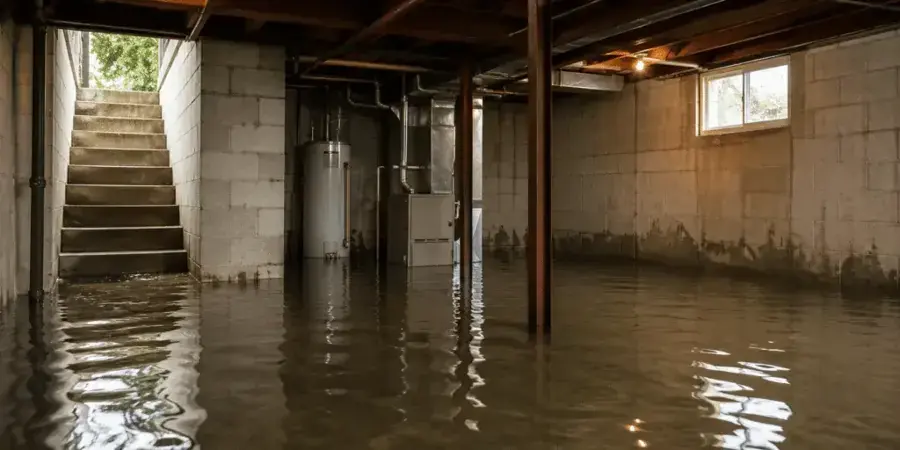
First steps for basement flooding cleanup in Lee's Summit
- 1
Stop the source
Close the shutoff for a leaking supply pipe, or note where outside water entered, before touching anything.
- 2
Raise what you can
Set boxes, small furniture and electronics on a dry upper surface and leave the wet carpet for the crew.
- 3
Stay out of the water
Water near outlets, a furnace or a panel can energize the floor, so wait for power to be confirmed off.
- 4
Photograph the damage
Take wide and close shots of the water level, the affected items and the source for the adjuster.
What does basement flooding cleanup cost in Lee's Summit, MO?
A Lee's Summit basement flood usually costs $1,500 to $3,500 for clean water on an unfinished floor, $4,000 to $11,000 when the space is finished, and more when sewage or outside water is involved. Area and time decide the rest.
Unfinished space, clean water
- Pumping and slab extraction
- Air movers set in place
- Readings logged daily
Finished basement
- Wet pad and flood cuts removed
- Dehumidifiers for wall cavities
- Moisture map for the insurer
Sewage or outside flood water
- Containment and air scrubbers
- Porous materials taken out
- Antimicrobial treatment applied
Ranges are typical, not a quote: the water category, the wet square footage, the material class and how fast drying started move the number most. Run the water damage cost calculator for a closer planning range.
How basement flooding cleanup is handled in Lee's Summit
- 1
Inspect and map
Meters and a thermal camera mark every wet surface, and the water category is recorded before anything is removed.
- 2
Pump and extract
Submersible pumps clear deep water, then truck-mounted extraction lifts what remains from carpet, pad and slab.
- 3
Remove and open
Wet pad and baseboards go out, and flood cuts expose cavities that hold hidden moisture.
- 4
Dry and confirm
Dehumidifiers and air movers run until slab and wall readings match a dry reference, then the equipment is pulled.
Lee's Summit basements take on water from storm runoff, failed sump pumps and broken supply pipes, and the first job is the same for each: remove the water, then find out how far it traveled.
How a flooded basement gets handled
Pumps come first for deep water, followed by truck-mounted extraction on carpet and slab. The mitigation team then probes baseboards and wall bottoms with a meter, because wet drywall often looks fine above the visible stain.
Finished spaces need extra care. Carpet, pad, baseboards and the lower drywall are judged one layer at a time, and anything that cannot dry is removed in clean flood cuts.
- Standing water pumped out
- Wet carpet and pad removed
- Flood cuts made above the wet zone
- Dehumidifiers set for the slab
Lee's Summit conditions that matter
The city advises extending downspouts and French drains away from foundations, grading yards away from the house and keeping storm drains clear. Those steps cut the water that reaches a basement wall in the first place.
Spring is the most variable season, with high precipitation and sometimes tornadoes. When a basement floods during one, the drying team treats outside water as contaminated until inspection says otherwise.
Drying the slab and walls
A concrete slab holds water longer than carpet does, so dehumidifiers and air movers run while daily readings track the slab and the wall cavities. Equipment comes out only when the numbers match a dry reference, not when the surface feels dry to the touch.
Basement losses that start with a failed pump follow sump pump failure cleanup, while the equipment plan matches structural drying practice in Lee's Summit homes.
Basement flooding cleanup across Lee's Summit and nearby towns
The extraction crew handles basement floods in Downtown Lee's Summit, New Longview, Winterset Valley and the residential streets near Longview Lake, from finished rec rooms to bare utility basements. Single-family housing fills the east and west neighborhoods, so crews work in houses with finished and unfinished lower levels alike.
The same service nearby: basement flooding cleanup in Blue Springs, Raytown, Grain Valley.
Water damage restoration in Lee's Summit · every town covered
Related water damage services in Lee's Summit
Basement Flooding Cleanup questions in Lee's Summit, MO
Why does a basement flood need quick action?
Wet drywall and pad can start growing mold in 24 to 48 hours, and moisture climbs into wall cavities the longer the water stays.
Is basement flood water clean or contaminated?
Water from a failed supply pipe starts clean, but storm runoff and sewage are contaminated, and clean water that sits for days degrades. The category is set before work starts.
Does homeowners insurance cover a flooded basement?
It depends on the cause. A burst pipe is often covered, but flood damage is usually excluded from standard homeowner coverage, so storm water may call for a separate flood policy.
Can the carpet in a flooded basement be saved?
Clean water caught early sometimes allows carpet to be lifted and dried, but pad is usually discarded. If sewage or outside water touched it, carpet and pad both go.
What should be moved out of a wet basement?
Electronics, papers, boxes and small furniture can be raised onto dry surfaces if power is off. Heavy furniture is left for the crew, which blocks and lifts it safely.
How is a basement declared dry?
Moisture readings on the slab, baseboards and wall bottoms are compared with dry reference readings from unaffected areas, and the logs go to the insurer.
Basement under water in Lee's Summit?
The extraction crew pumps the water, removes what cannot dry and sets equipment, then documents readings daily so the property owner and the insurer both have a clear record of the drying.
(888) 603-7319Talk to the drying team