AC and Furnace Condensate Leaks in Grain Valley, MO
A clogged condensate drain can overflow a pan and run into ceilings, closets and floors unnoticed. The Grain Valley mitigation team finds the wet areas, removes the water and dries them.
(888) 603-7319Report a condensate leak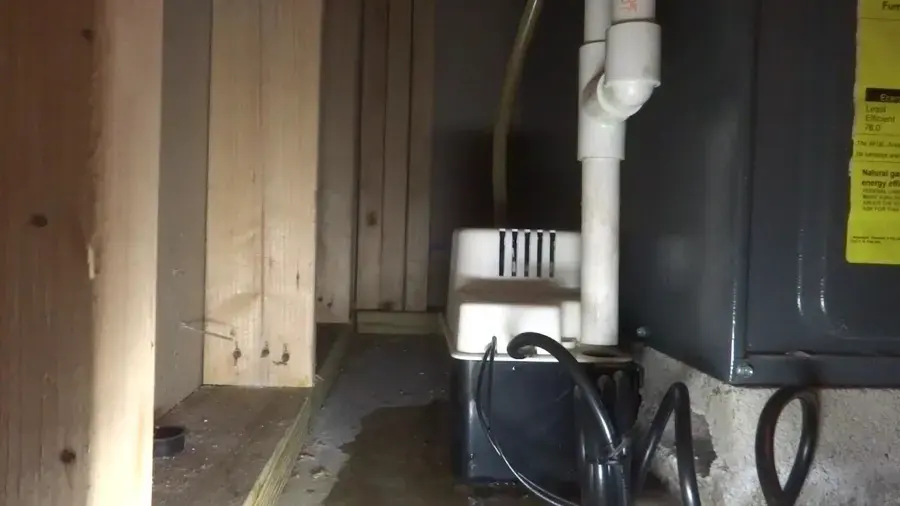
First steps for ac and furnace condensate leaks in Grain Valley
- 1
Switch off the system
Turn the thermostat off and flip the unit's breaker so no more condensate forms.
- 2
Check the pan
If a pan is full and safe to reach, empty it with a wet vacuum or towels.
- 3
Protect the area
Lift boxes and belongings from the floor and place towels around the base of the unit.
- 4
Photograph the leak
Record the pan, the drain and any stained ceiling or wet wall.
What does ac and furnace condensate leaks cost in Grain Valley, MO?
Cost depends on how long the leak ran and what it reached. A bare utility room costs the least, an adjoining finished room adds drywall and pad work, and long-running leaks add treatment.
Bare utility room
- Extraction
- Slab drying
- Moisture readings
Adjoining finished room
- Pad and wall bottoms removed
- Wall drying
- Daily logs
Long-running leak
- More material removed
- Antimicrobial treatment
- Full claim file
Ranges are typical, not a quote: the water category, the wet square footage, the material class and how fast drying started move the number most. Run the water damage cost calculator for a closer planning range.
How ac and furnace condensate leaks is handled in Grain Valley
- 1
Find the overflow
The crew traces the water to the pan or drain and maps wet floor, walls and ceiling.
- 2
Remove the water
Standing water is extracted and wet pad is lifted from the area.
- 3
Open wet spots
Wall bottoms and ceiling sections that stayed damp are opened for drying.
- 4
Dry and confirm
Dehumidifiers run until readings return to dry levels, and the log is saved.
Air conditioners and high-efficiency furnaces pull water out of the air and send it down a small drain. Algae or debris can clog that drain, and once it does, the pan fills and water spills out where the equipment sits.
Where condensate ends up
An air handler in an attic or closet can leak into the ceiling below, while one in a utility room sends water across the floor and into wall bottoms. Either way, the drain is the first thing checked.
Condensate water is not as clean as supply water, as it passes over coils that collect dust and growth. Porous materials that stay wet are removed rather than dried in place.
- Water removed from the pan area
- Wet pad and wall bottoms opened
- Ceiling below checked
- Drain path noted
Summer cooling and winter heat
Cooling season puts a steady load on the drain, and high-efficiency furnaces also make condensate when they heat. A clog can build in either season, so a leak may appear at any time of year.
Fixing the drain belongs to an HVAC technician. The drying crew deals with the water, and a bigger loss may overlap with water heater leak cleanup in the same utility area.
Drying and follow up
After extraction, small dehumidifiers and air movers dry the floor and wall bottoms. Readings are taken each visit, and structural drying continues until the framing tests dry.
If the leak ran a long time, extra material may need removal, and the logs show why.
Ac and furnace condensate leaks across Grain Valley and nearby towns
Condensate leak cleanup serves homes in the 64029 ZIP code, from Rosewood Hills, Woodbury and Creekside Village near Interstate 70 to Sni-A-Bar Farms in the southern part of the city, plus Greystone townhomes, Breezeway, Blue Branch and Downtown Grain Valley. Farmington Meadows is covered too.
The same service nearby: ac and furnace condensate leaks in Blue Springs, Oak Grove, Independence.
Water damage restoration in Grain Valley · every town covered
AC and Furnace Condensate Leaks questions in Grain Valley, MO
Why does a condensate drain clog?
Algae, dust and debris build up in the small drain over time. A clog stops water from leaving the pan, and the overflow soaks whatever sits below.
Can a condensate leak damage a ceiling?
Yes. An air handler in an attic or upper closet can drip through the drywall below, often as a stain that slowly grows.
Is condensate water contaminated?
It is not sewage, but it is not pure. It crosses coils and drain parts, so wet porous materials that cannot dry fast are removed.
Who clears the clogged drain?
An HVAC technician clears or replaces it. The drying crew handles the water damage, and the two jobs fit together.
Can the system run while drying?
It should stay off until the drain is cleared, otherwise water keeps forming.
Dry out after the drain clogs
The mitigation team removes the water, opens wet wall bottoms and ceilings and dries the structure, then supplies photos and readings for the insurance file. Repairs begin once readings are dry.
(888) 603-7319Start condensate cleanup