Structural Drying in Grain Valley, MO
Water that has been pumped out is only half the job. The Grain Valley drying team places air movers and dehumidifiers and tracks readings until framing and floors are truly dry.
(888) 603-7319Set up drying equipment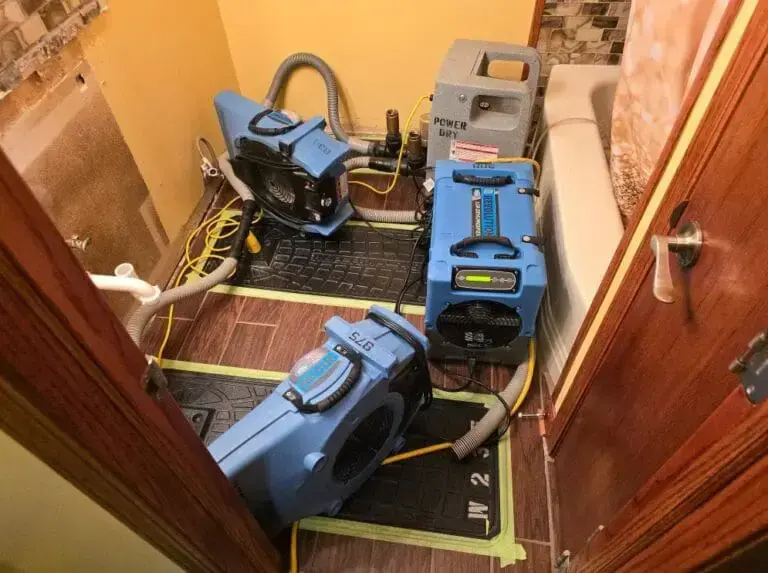
First steps for structural drying and dehumidification in Grain Valley
- 1
Remove standing water
Extraction should happen first, because drying equipment cannot do the work of pumps and vacuums.
- 2
Leave equipment running
Air movers and dehumidifiers work continuously, so keep doors and windows closed in the drying area.
- 3
Keep the area clear
Avoid moving or turning off equipment, and keep children and pets out of the drying zone.
- 4
Track the readings
Ask for the daily moisture log, which shows progress and supports the claim.
What does structural drying and dehumidification cost in Grain Valley, MO?
Drying cost reflects the equipment count and the days needed. One room needs the fewest units, a whole basement uses several dehumidifiers, and slab or hardwood work calls for specialized drying.
One room, class one to two
- Air movers and LGR dehumidifier
- Three to four days
- Daily readings
Whole basement
- Multiple dehumidifiers
- Wall and slab drying
- Psychrometric logs
Class four slab or hardwood
- Desiccant dehumidifiers
- Injection or mat drying
- Extended monitoring
Ranges are typical, not a quote: the water category, the wet square footage, the material class and how fast drying started move the number most. Run the water damage cost calculator for a closer planning range.
How structural drying and dehumidification is handled in Grain Valley
- 1
Map the moisture
Meters and a thermal camera identify wet framing, subfloor and slab before equipment is placed.
- 2
Place the equipment
Air movers and dehumidifiers are set to move air across every wet surface.
- 3
Monitor each visit
Readings of moisture and humidity are recorded and equipment is adjusted.
- 4
Confirm dry
Materials meet dry standards, then the equipment is removed.
Drying is a measured process, not just running fans. The team controls humidity and airflow so moisture moves out of wood and concrete, and readings decide when the equipment can come out, not the calendar.
Why wet framing needs real drying
Studs, plates and subfloor keep moisture long after the surface looks dry. Left alone, that moisture swells wood, loosens flooring and can feed mold, so drying aims for the original dry values.
Dehumidifiers pull water from the air, and air movers sweep damp air off wet surfaces so more moisture can leave the material.
- Air movers set along wet walls
- Dehumidifiers sized to the room
- Meters checking wood and slab
- Equipment moved as areas dry
Old downtown and newer subdivisions
Drying framing, subfloor and concrete is the same process in newer subdivisions like Sni-A-Bar Farms and Woodbury and in older buildings in Downtown Grain Valley. What changes is the construction, so the team adjusts equipment to what is behind the walls.
Concrete slabs dry slowly and hardwood can cup, so those materials get more monitoring. A flooded lower level also involves basement flooding cleanup before drying starts.
Proof that it is dry
Daily moisture readings and humidity logs show a clear drop toward dry reference levels. When the numbers match, the equipment comes out and the structure is ready for repairs, with a record for the adjuster.
Extraction comes first, and the team handles it as described under water extraction.
Structural drying and dehumidification across Grain Valley and nearby towns
Structural drying serves the 64029 ZIP code, including Downtown Grain Valley, Main Street, Creekside Village, Greystone, Farmington Meadows, Breezeway and Blue Branch, as well as Sni-A-Bar Farms, Rosewood Hills and Woodbury, in buildings old and new. Business buildings near Interstate 70 are included.
The same service nearby: structural drying and dehumidification in Blue Springs, Oak Grove, Independence.
Water damage restoration in Grain Valley · every town covered
Related water damage services in Grain Valley
Structural Drying and Dehumidification questions in Grain Valley, MO
How long does structural drying take?
It depends on the materials and how wet they got. Many rooms need a few days, while slabs and hardwood take longer, and readings decide the finish.
Why are the dehumidifiers so loud?
They move large volumes of air and run continuously. The noise is a sign the equipment is pulling moisture, and it stops once readings are dry.
Can drying equipment run overnight?
Yes. Continuous operation is what makes it effective, and the units are placed so cords and hoses stay out of walkways.
Is drying the same as extraction?
No. Extraction removes liquid water, while drying removes moisture held inside materials and the air. Both steps are needed after most losses.
What do the daily readings show?
Moisture content in wood and concrete plus humidity in the room. The trend toward dry values shows when the job is done and supports the claim.
Get readings that prove it is dry
The drying team sets air movers and dehumidifiers, logs moisture each visit and removes equipment only when framing, subfloor and slab reach dry levels. A written log is provided.
(888) 603-7319Start structural drying